Blog Credit : Trupti Thakur
Image Courtesy : Google
The QR Code Attack
Understanding Quishing, Credential Theft and the Hidden Risks of QR-Based Attacks
QR codes have become part of everyday digital operations. Employees scan them to access meeting invitations, download documents, connect to Wi-Fi networks, complete authentication processes and make payments. Their convenience, however, has created another opportunity for cybercriminals.
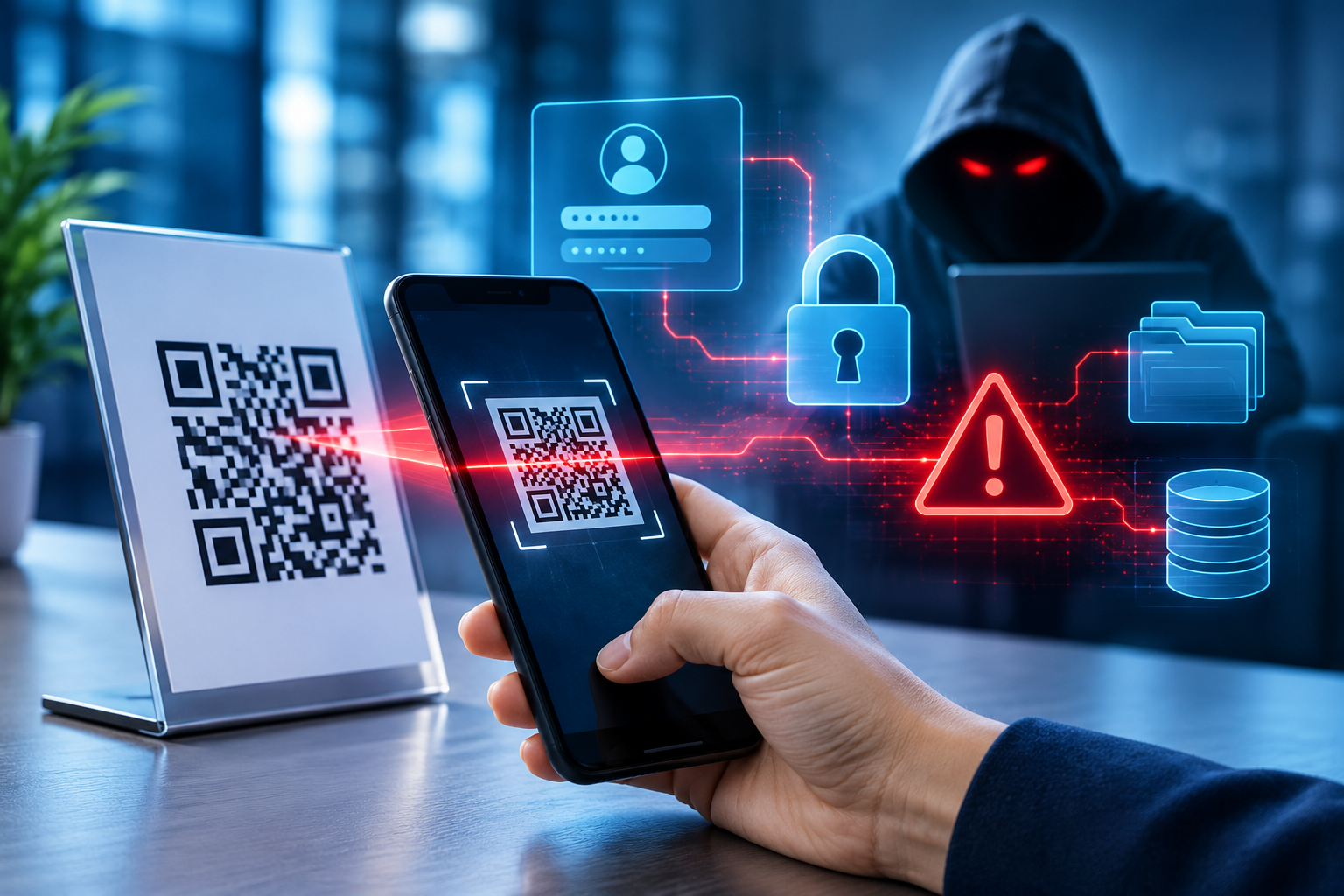
A QR code may appear harmless, but it can conceal a malicious URL designed to redirect users to fraudulent login portals, steal corporate credentials or initiate unauthorized access. This technique, commonly known as Quishing (QR Code Phishing), is an evolving form of social engineering that exploits user trust and the widespread use of mobile devices.
How Does a QR-Based Attack Work?
Unlike traditional phishing emails, where users can often inspect a hyperlink before clicking, QR codes hide their destination until they are scanned. Attackers exploit this limitation through carefully designed scenarios.
A typical attack may follow this sequence:
- The Initial Lure: An employee receives an email containing a QR code disguised as a document-sharing notification, Microsoft 365 authentication request or urgent security verification.
- The Scan: The employee scans the code using a personal or corporate smartphone.
- The Malicious Redirect: The QR code directs the employee to a fraudulent website that closely resembles a legitimate corporate login portal.
- Credential Capture: The employee enters their username, password or other authentication information.
- Account Compromise: Attackers use the stolen credentials, and potentially captured authentication sessions, to attempt unauthorized access to corporate resources.
In more sophisticated attacks, adversaries may use adversary-in-the-middle techniques to intercept authentication sessions, potentially bypassing certain forms of multi-factor authentication.
Why Are QR-Based Attacks Particularly Dangerous for Organizations?
The growing dependence on mobile devices has introduced a security gap between corporate email environments and personal smartphones.
When employees scan QR codes using devices that are not fully managed by the organization, traditional email security controls may have limited visibility into the subsequent browsing activity.
Some key risks include:
- Credential Compromise: Corporate usernames and passwords may be captured through counterfeit authentication pages.
- Session Hijacking: Stolen session tokens may allow attackers to misuse authenticated sessions.
- Business Email Compromise (BEC): Compromised corporate accounts can be exploited to impersonate employees, manipulate payment instructions or target business partners.
- Unauthorized Data Access: Attackers may attempt to access confidential documents, cloud platforms and internal business applications.
- Lateral Movement: A compromised identity can become an entry point for further attacks against connected organizational systems.
The real concern is not simply the malicious QR code itself, but the possibility that one routine interaction can become the starting point of a much larger security incident.
Strengthening Organizational Defences Against Quishing
Organizations should recognize QR-based phishing as part of their broader information security and identity management risk landscape.
The following measures can help reduce exposure:
- Security Awareness: Conduct focused awareness sessions to help employees identify suspicious QR codes, unexpected authentication requests and fraudulent login pages.
- Email Security Controls: Implement advanced email filtering and URL inspection capabilities to identify suspicious QR-code-based campaigns.
- Multi-Factor Authentication: Adopt phishing-resistant authentication methods, such as FIDO2 security keys or passkeys, wherever feasible.
- Conditional Access: Apply device compliance, location and risk-based access restrictions to protect corporate applications.
- Mobile Device Management: Establish appropriate security controls for devices accessing organizational information, including personal devices under approved BYOD arrangements.
- Incident Reporting: Encourage employees to immediately report suspicious QR codes and suspected credential exposure, enabling timely investigation and account protection.
The Information Security Perspective
From an ISO/IEC 27001:2022 perspective, QR-based phishing is not merely an email security concern. It highlights the importance of managing identity and access, user awareness, endpoint security, threat intelligence and incident response.
Organizations should consider relevant controls such as:
- A.5.15 – Access Control
- A.5.16 – Identity Management
- A.5.17 – Authentication Information
- A.6.3 – Information Security Awareness, Education and Training
- A.8.5 – Secure Authentication
- A.8.7 – Protection Against Malware
- A.8.23 – Web Filtering
These controls should be implemented based on the organization’s risk assessment, applicable requirements and operating environment.
Conclusion: Convenience Should Never Replace Verification
QR codes have simplified digital interactions, but convenience should not come at the cost of organizational security. Cybercriminals increasingly exploit familiar technologies and routine employee behaviour to make malicious activities appear legitimate.
The next corporate security incident may not begin with a suspicious attachment or an obvious phishing email. It may begin with a QR code that an employee scans without a second thought.
In today’s threat landscape, the ability to recognize a suspicious link is no longer enough. Employees must also learn to question what they scan.
Blog By : Trupti Thakur
18
NovThe QR Trap
Nov 18, 2026Recent Blog

The Silent Access ThreatNov 25, 2026

The Practical Security RecommendationsNov 24, 2026

The Encryption IllusionNov 23, 2026
The QR TrapNov 18, 2026

The Five Minutes Attack ChainNov 17, 2026